
Our Engineers, Inspectors, and Technicians work tirelessly to make structures more safe for our clients and the public. But what about the hazards that are present at every step of the process? From the depths of trenches to the highest heights, safety hazards can be found everywhere on a jobsite. It’s easy to miss or fall complacent about safety when you’re focused on highly detailed work like inspection. At CTE Cal we hold the safety of our team members, colleagues, our clients and the public in the highest regard. That commitment to safety begins with each team member, on each site visit they perform!
Driving – The Start of Every Dispatch!
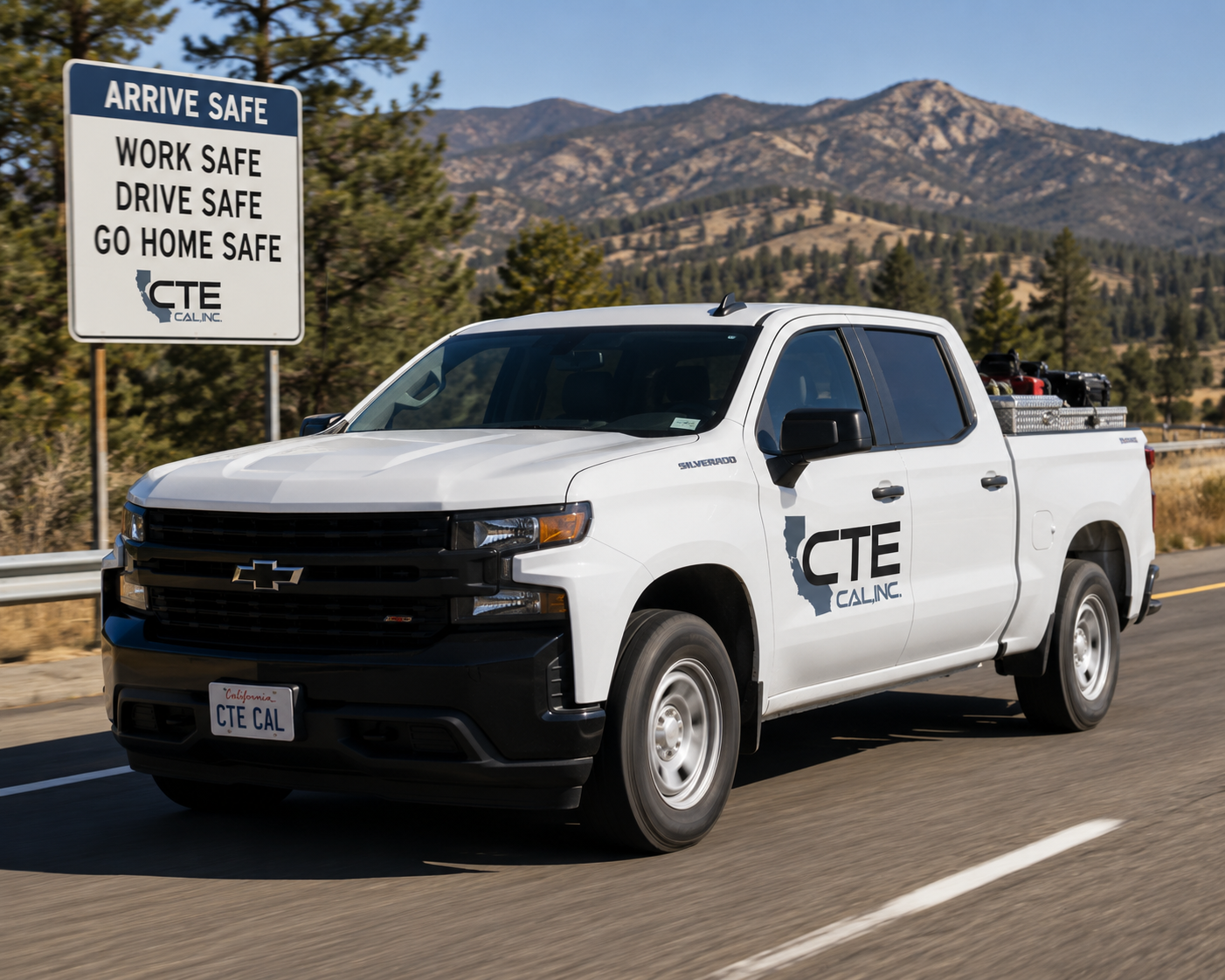
Every job starts with driving – and safe driving is essential to protecting our employees, coworkers, and the public while traveling between jobsites. CTE Cal expects safety to come first on every trip, whether driving a company vehicle, personal vehicle, or rental. Drivers should remain alert to hazards such as fatigue, distractions, unsafe speeds, changing weather and traffic conditions, unsecured equipment, and vehicle maintenance issues. Before driving, perform a brief pre-trip inspection to confirm the vehicle is safe and loads are secure, and always wear a seatbelt, obey traffic laws, maintain safe following distances, and avoid distracted or impaired driving. If fatigue, road conditions, or equipment issues make travel unsafe, stop and contact your supervisor—management will support the decision to prioritize safety. Every trip begins with two simple questions: Is my vehicle ready, and am I ready to drive safely?
While traveling, practice Defensive Driving – it’s far more important that you arrive safely than making that light, going first at the 4-way stop, or
Hazard Awareness – You Can’t Avoid What You Don’t See!
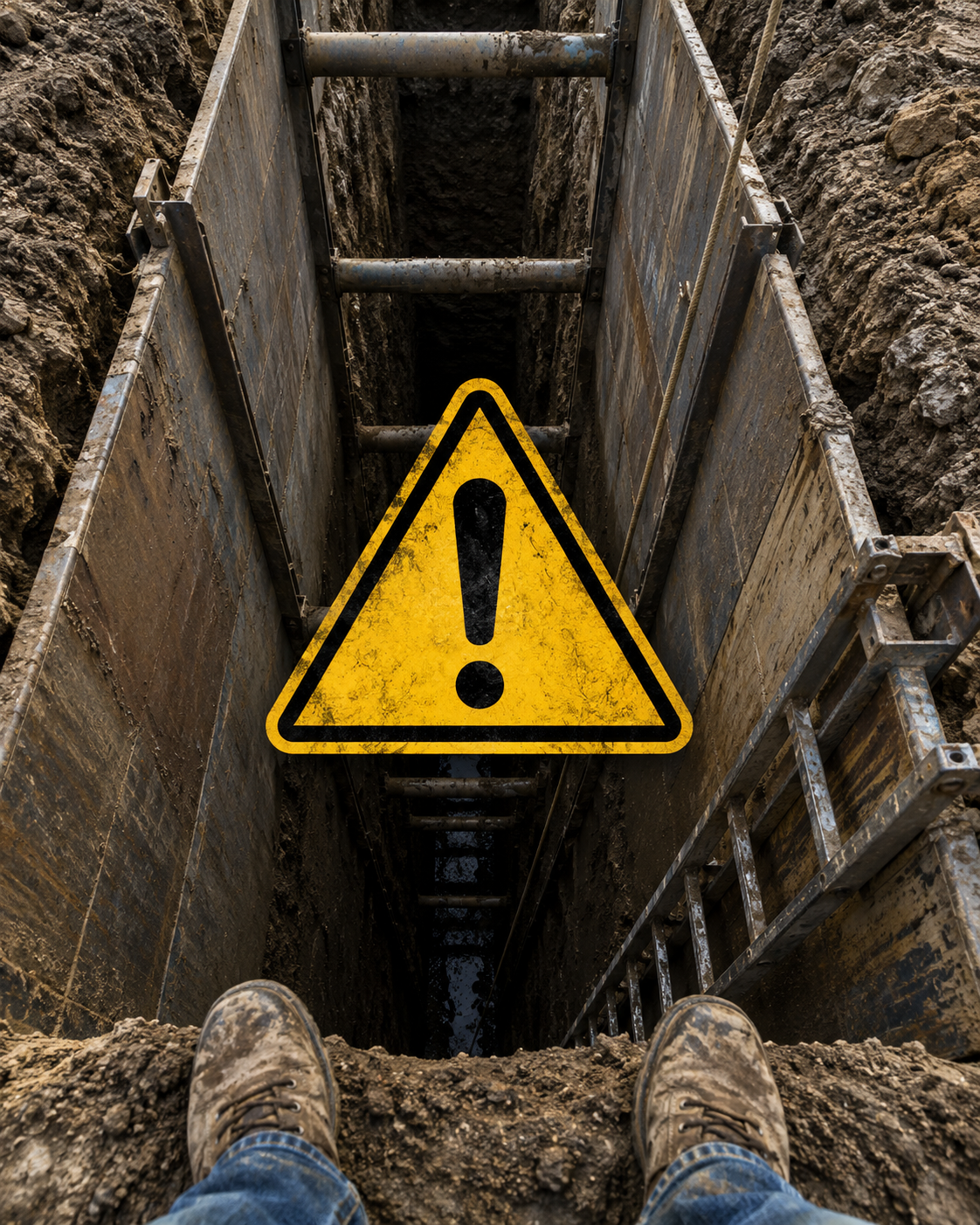
A huge part of jobsite safety is hazard awareness. You can’t avoid a hazard that you can’t see, or properly recognize! A lot of dangerous situations may be concealed, or hiding in plain site. Those hazards include:
- Confined Spaces – Small, hard to exit areas that can pose atmosphere, flooding, and other dangers
- Trenches – Similar to Confined Space, with the added danger of wall collapse
- Fall Hazards – Stay away from unprotected edges
- Respiratory Hazards – Stay away from potentially hazardous atmospheres
Some of these less obvious hazards can be the most serious. Confined spaces, trenches and excavations, fall hazards, and respiratory hazards can expose employees to severe or life-threatening conditions even when we are only entering an area briefly to perform an inspection or observation. CTE Cal employees should recognize these hazards before approaching them and make awareness and avoidance the first line of defense. Do not enter confined spaces or trenches unless the work specifically requires it and all applicable safety requirements have been addressed; whenever possible, perform observations from a safe location outside the hazard area. Likewise, stay back from unprotected edges, floor openings, excavations, elevated work areas, and other locations where a fall could occur. Never assume an area is safe simply because other workers are present or accessing it. Stop, identify the hazard, maintain a safe distance, and determine whether your work can be completed without entering the hazardous area. If exposure cannot be avoided, do not proceed until the appropriate protective measures, training, access requirements, and authorization are in place.
Be careful when multiple hazards occur at the same time! Confined spaces can carry hazardous atmospheres more easily due to lack of ventilation.
Vigilance – Avoiding Others and Being Seen
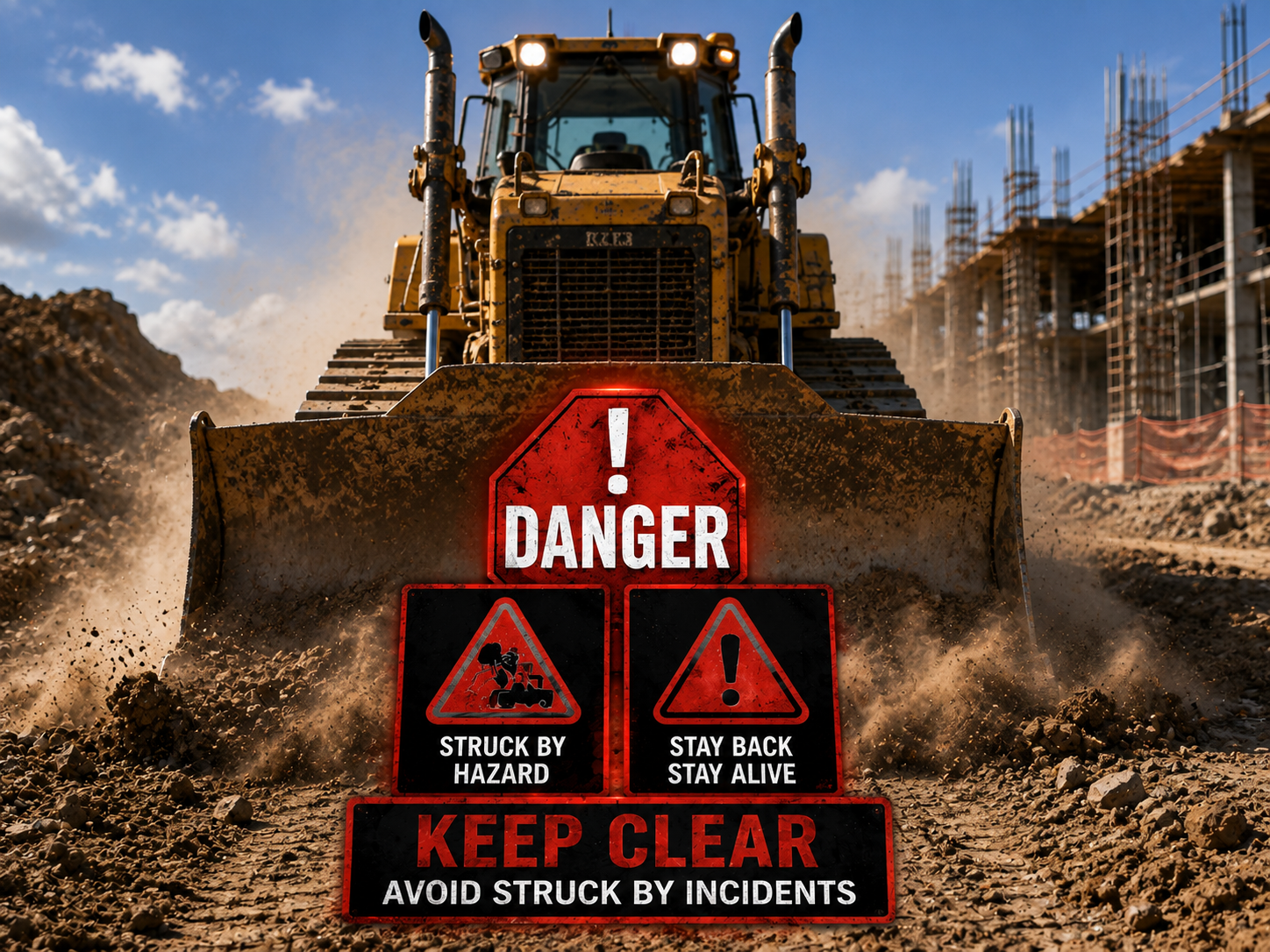
Avoiding heavy equipment is critical when on site. We are a small part of a large, complex operation, so staying aware and staying out of the way is very important. Struck-by hazards are especially important during grading and earthwork operations, where dozers, loaders, excavators, scrapers, and haul trucks may be moving continuously and operators may have significant blind spots. Density testing can place CTE Cal technicians on foot in the same areas where heavy equipment is actively placing and compacting soil, making awareness and communication critical. Whenever possible, avoid entering active equipment operating zones and never assume an operator can see you. Establish eye contact or positive communication with the operator before approaching equipment, stay clear of backing and turning paths, and position yourself where you have a clear escape route. Testing should be coordinated so equipment is stopped or moved a safe distance away before entering an area to perform a density test. Conditions can change quickly as equipment moves from one lift or test location to another, so continuously reassess your surroundings rather than relying on where equipment was a few moments ago. Your safest position is one that keeps you separated from moving equipment—if you are unsure whether an operator sees you, assume they do not and stay clear.
Personal Protective Equipment (PPE) – The Last Line of Defense
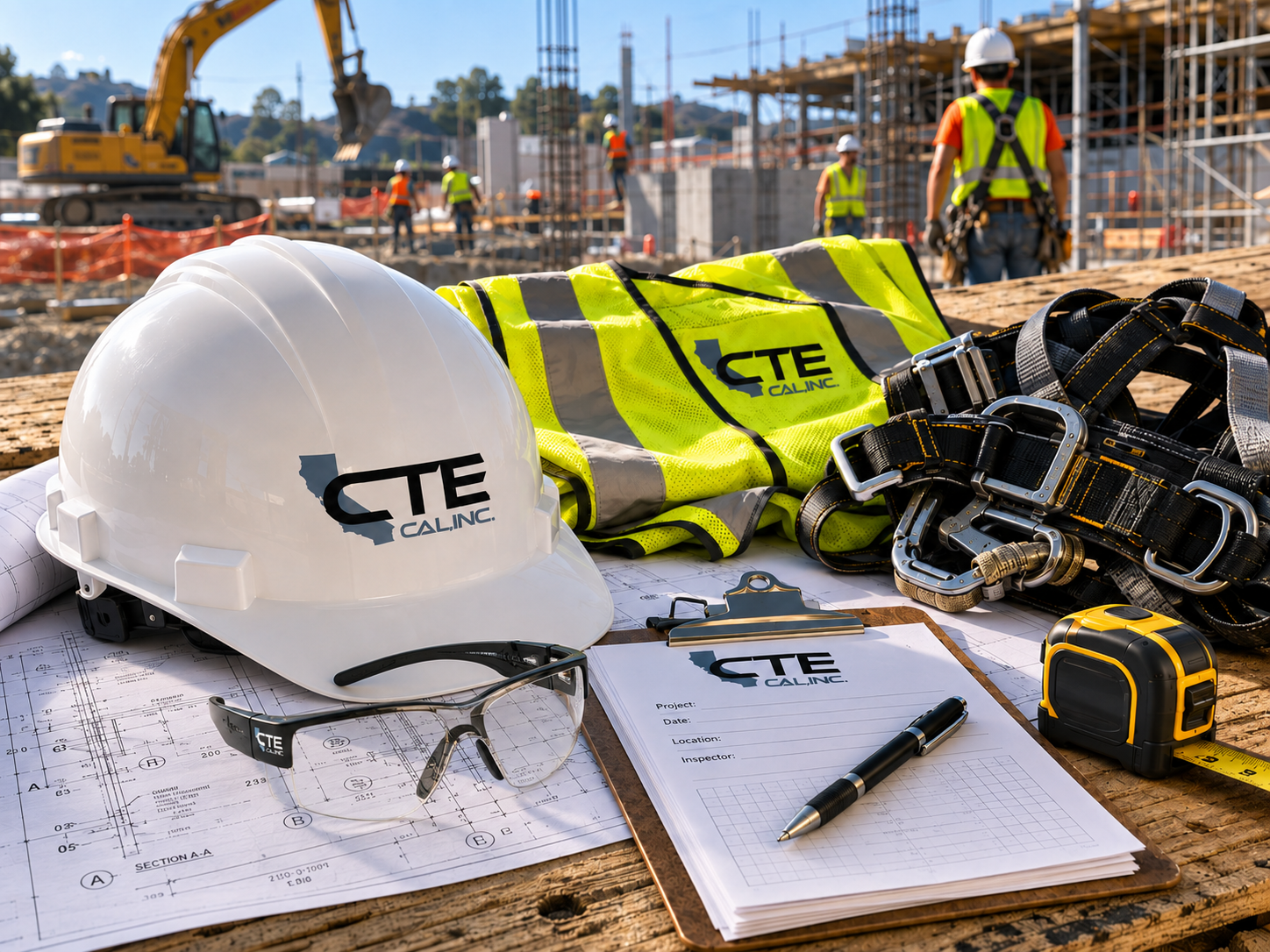
Personal Protective Equipment (PPE) is our last line of defense against jobsite hazards, but it does not replace awareness and hazard avoidance. CTE Cal employees should arrive at every jobsite with the basic PPE appropriate for construction activities, including a hard hat, safety glasses, high-visibility vest, appropriate work boots, and task-specific gloves. Additional protection such as hearing protection, fall protection, or respiratory protection may be necessary depending on the work environment. Before entering a work area, take a moment to identify the hazards around you and determine whether exposure can be avoided altogether. Inspect PPE regularly for damage or wear, and never enter an area simply because you have protective equipment available. PPE can reduce the consequences of an exposure, but maintaining a safe distance and avoiding the hazard in the first place provides the best protection.
Continuing to Learn
There are many more topics on Safety in Engineering, Inspection, and Testing – it is a constantly evolving situation that requires continuing education, frequent re-training, and constant awareness. At CTE Cal, we implement a multi-tiered system to provide the best possible safety oversight and management system for our team. First, we have developed numerous in-house training programs to educate our team members about the hazards associated with our work. We regularly send out safety briefings to all employees covering the most common hazards in our work. We highlight construction safety events in the news, and discuss their implications.
Secondly, we have recruited third-party firms to supplement and validate our training procedures. CTE Cal is proud to be a Member Contractor of the ISNetworld Program, a comprehensive Information Management System used by 900+ of the largest organizations nationally. Through their system, CTE Cal gains feedback and guidance on how to stay on the cutting edge of safety in construction, testing, inspection, and engineering work.

More Information
If you’re interested in joining a team seriously committed to safety, please contact us. If you think your jobsite could benefit from a team dedicated to safety, we’d appreciate the opportunity! Please feel free to reach out to our team of engineers and inspectors to see if we’d be a good fit for your project. And please remember to Stay Safe!